


Housing adaptation grants in Ireland: who can get what
Irish local authority grants to adapt a home: Housing Adaptation Grant, Housing Aid for Older People and Mobility Aids Grant. Amounts, means test, how to apply.
By Mobility.expert Editorial Team · Updated · Not clinically reviewed
In brief
- Local authorities run three grants to adapt or repair a home for an older or disabled person, using one application form.
- Under the revised scheme from 1 December 2024, the Housing Adaptation Grant for Disabled People can be up to 40,000 euro, Housing Aid for Older People up to 10,700 euro and the Mobility Aids Grant up to 8,000 euro.
- All three are means tested on the gross household income of the owner and spouse (or tenant and spouse) in the previous tax year.
- You must get approval before any work starts.
- An OT report is needed for bigger changes, such as a stairlift, through-floor lift, hoist or extension.
If your home is getting harder to live in, your local authority may help pay to change it. There are three grants. They share one application form, called “Housing Adaptation Grants for Older People and Disabled People”. This guide explains each one, how much you might get and how to apply.
The three grants at a glance
These figures come from gov.ie. They apply to applications made on or after 1 December 2024, when the revised scheme started (gov.ie press release).
| Grant | What it is for | Effective maximum |
|---|---|---|
| Housing Adaptation Grant for Disabled People | Bigger changes to make a home suitable for a disabled person | 40,000 euro, up to 100% of approved cost |
| Housing Aid for Older People | Essential repairs for people aged 66 or over | 10,700 euro, up to 100% of approved cost |
| Mobility Aids Grant | A quicker route for basic mobility works | 8,000 euro, up to 100% of cost |
Some older pages, including some on Citizens Information, still show the old amounts. Check the current figures with your local authority.
Housing Adaptation Grant for Disabled People
This grant pays for work that is “reasonably necessary” to make a home more suitable for a disabled person. gov.ie gives these examples:
- ramps or other access routes
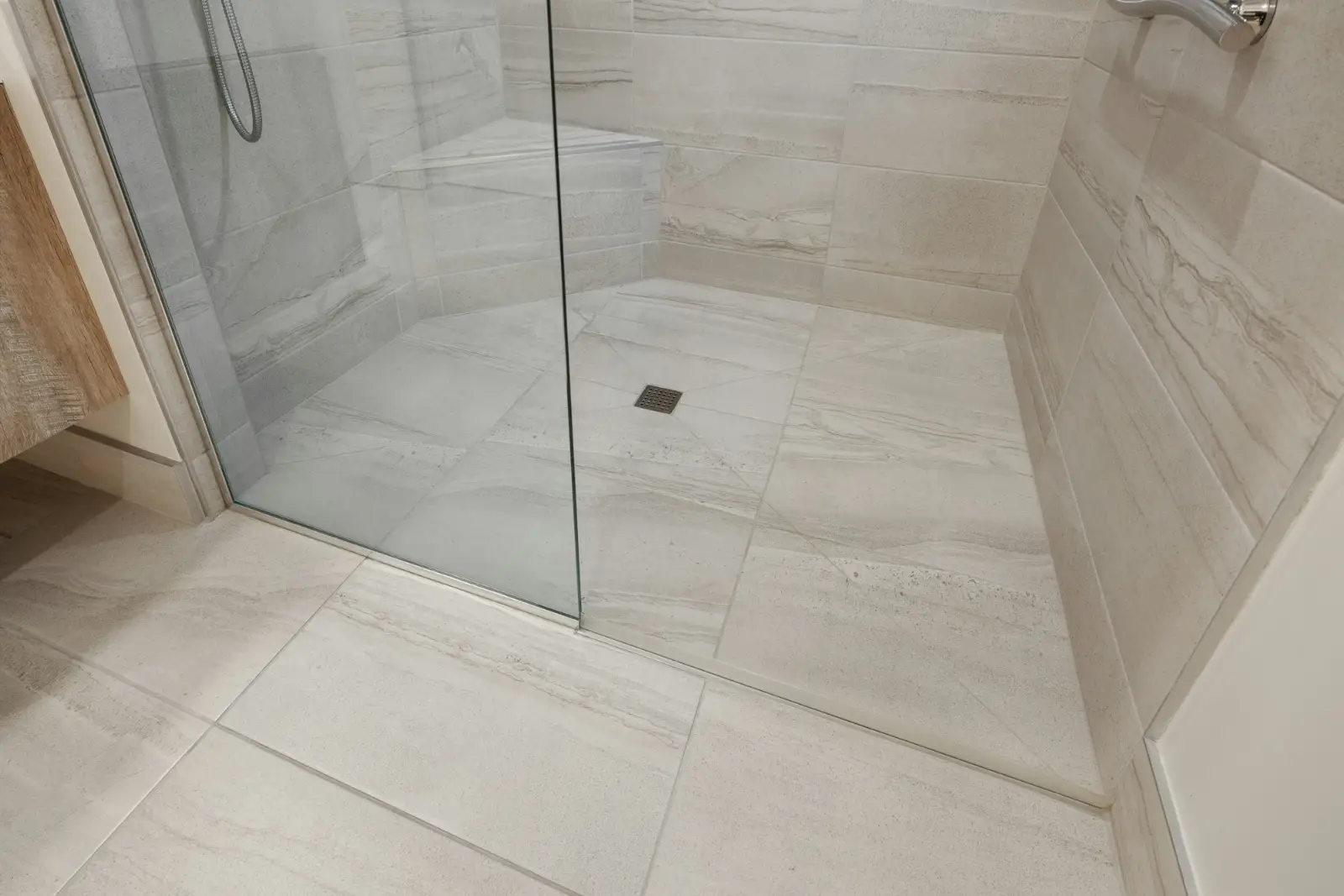
- accessible showers or downstairs toilets
- stairlifts or through-floor lifts
- fixed track hoists (not servicing, maintenance or training)
- space for wheelchair access
- extensions, usually a bedroom or bathroom.
Housing Aid for Older People
This grant is for older people living in poor housing conditions. You generally need to be 66 or over. People under 66 may qualify in cases of hardship. gov.ie lists repairs such as roof repair or replacement, rewiring, central heating repair or installation, and door and window repair or replacement.
Mobility Aids Grant
This is for basic works for mobility problems, mainly but not only linked to ageing. gov.ie lists grab rails, a ramp, an accessible shower, fixed track hoists and a stairlift. The full grant may be available where gross household income is up to 37,500 euro a year.
The means test
All three grants look at the gross annual household income of the owner and their spouse in the previous tax year. Under the revised scheme, for a private rented home it is the tenant and spouse. Current-year income can be used in exceptional cases (gov.ie press release).
Dublin City Council publishes this table of income bands for the Housing Adaptation Grant for Disabled People (Dublin City Council):
| Yearly household income (after deductions) | Share of approved cost |
|---|---|
| Up to 37,500 euro | 100% |
| 37,501 to 43,750 euro | 85% |
| 43,751 to 50,000 euro | 75% |
| 50,001 to 62,500 euro | 50% |
| 62,501 to 75,000 euro | 30% |
| Over 75,000 euro | No grant |
Each band also has its own cash limit. Ask your local authority what applies to you.
Some income is not counted. Dublin City Council lists payments such as Carer’s Allowance, Carer’s Benefit, Child Benefit, Domiciliary Care Allowance, Fuel Allowance and the Household Benefits Package.
Some costs are taken off. Under the revised scheme, deductions include 6,250 euro for each child, 6,250 euro if a relative is a full-time carer, up to 6,250 euro for rent or mortgage, up to 12,500 euro for residential care fees, and up to 12,500 euro for care in the home (gov.ie press release).
VAT on the work is not covered by the grant. You may be able to reclaim VAT on some appliances from Revenue. See paying for mobility equipment.
Do you need an OT?
An occupational therapist (OT) can tell you which changes will really help. Dublin City Council says an OT assessment is needed for:
- a stairlift or through-floor lift
- a fixed track hoist
- an extension
- a major change to how a room is used.
You can get the report from a private OT. If your grant is approved, Dublin City Council pays up to 300 euro towards it. Other councils may differ.
For the Mobility Aids Grant, Citizens Information says a doctor completes part of the form, and an OT report is needed if you are getting a stairlift.
You can ask for an HSE OT through your Local Health Office, or ask your GP or public health nurse to refer you. There may be a waiting list (Citizens Information).
How to apply
- Get the form “Housing Adaptation Grants for Older People and Disabled People” from gov.ie, your local authority website, or the Housing Grants Section of your county or city council.
- Ask your doctor to complete the medical section, and get an OT report if needed.
- Send the form back to your local authority with proof of income for the previous tax year and any other documents it asks for.
- Wait for approval before any work starts. The revised scheme says an application must be approved first.
- Citizens Information says the council may send a technician to visit, and will ask for a quote, your contractor’s tax details and your bank details.
Citizens Information also says that for the Mobility Aids Grant, priority depends on medical need, and that you can appeal in writing to the local authority within 3 weeks of a decision.
Next steps
- Contact the Housing Grants Section of your local authority and ask for the current form and income limits.
- Ask your GP or public health nurse about an OT referral.
- If you need equipment rather than building work, read HSE aids and appliances.
- Use the funding finder to check other help.
Questions people ask
What is the most I can get?
gov.ie says the effective maximum is 40,000 euro for the Housing Adaptation Grant for Disabled People, 10,700 euro for Housing Aid for Older People and 8,000 euro for the Mobility Aids Grant. What you get depends on your income and the approved cost.
Can I start the work and claim later?
No. The December 2024 changes make clear that an application must be approved before works begin. Starting early could cost you the grant.
Can tenants apply?
Under the revised scheme, the income of the tenant and spouse is assessed for private rented homes, and the tenancy must be registered with the Residential Tenancies Board. You also need your landlord's permission for the work.
Do I need an OT?
Dublin City Council says an OT assessment is needed for a stairlift or through-floor lift, a fixed track hoist, an extension or a major change to how a room is used. It pays up to 300 euro towards a private OT report if your grant is approved.
Sources
- gov.ie: Housing Adaptation Grant for Disabled People (accessed 23 November 2026)
- gov.ie: Housing Aid for Older People Grant (accessed 23 November 2026)
- gov.ie: Mobility Aids Grant (accessed 23 November 2026)
- gov.ie: Ministers announce commencement of revised housing adaptation grants of up to 40,000 euro (accessed 23 November 2026)
- Dublin City Council: Housing Adaptation Grant for Disabled People (accessed 23 November 2026)
- Citizens Information: Mobility Aids Grant Scheme (accessed 23 November 2026)
- Citizens Information: Occupational therapy services (accessed 23 November 2026)
Spotted an error? Tell us and see our corrections policy.
This guide is general information, not medical advice. If you are unsure what is safe for you, speak to your GP, a physiotherapist or an occupational therapist.
Related guides
Buying mobility equipment safely in Ireland: your rights
Your rights when buying mobility equipment in Ireland: the Consumer Rights Act 2022, faulty goods, cooling-off periods for doorstep sales, and warranties.
Read guideHSE aids and appliances: how to get equipment in Ireland
How HSE aids and appliances work: medical card holders, assessment by an OT or physio, loan agreements, waiting lists and what to do without a medical card.
Read guidePaying for mobility equipment in Ireland: every route
Every way to pay for mobility equipment in Ireland: HSE aids and appliances, the medical card, tax relief, the VAT refund, housing grants and self-pay.
Read guide