


Independent living
Accessible kitchens
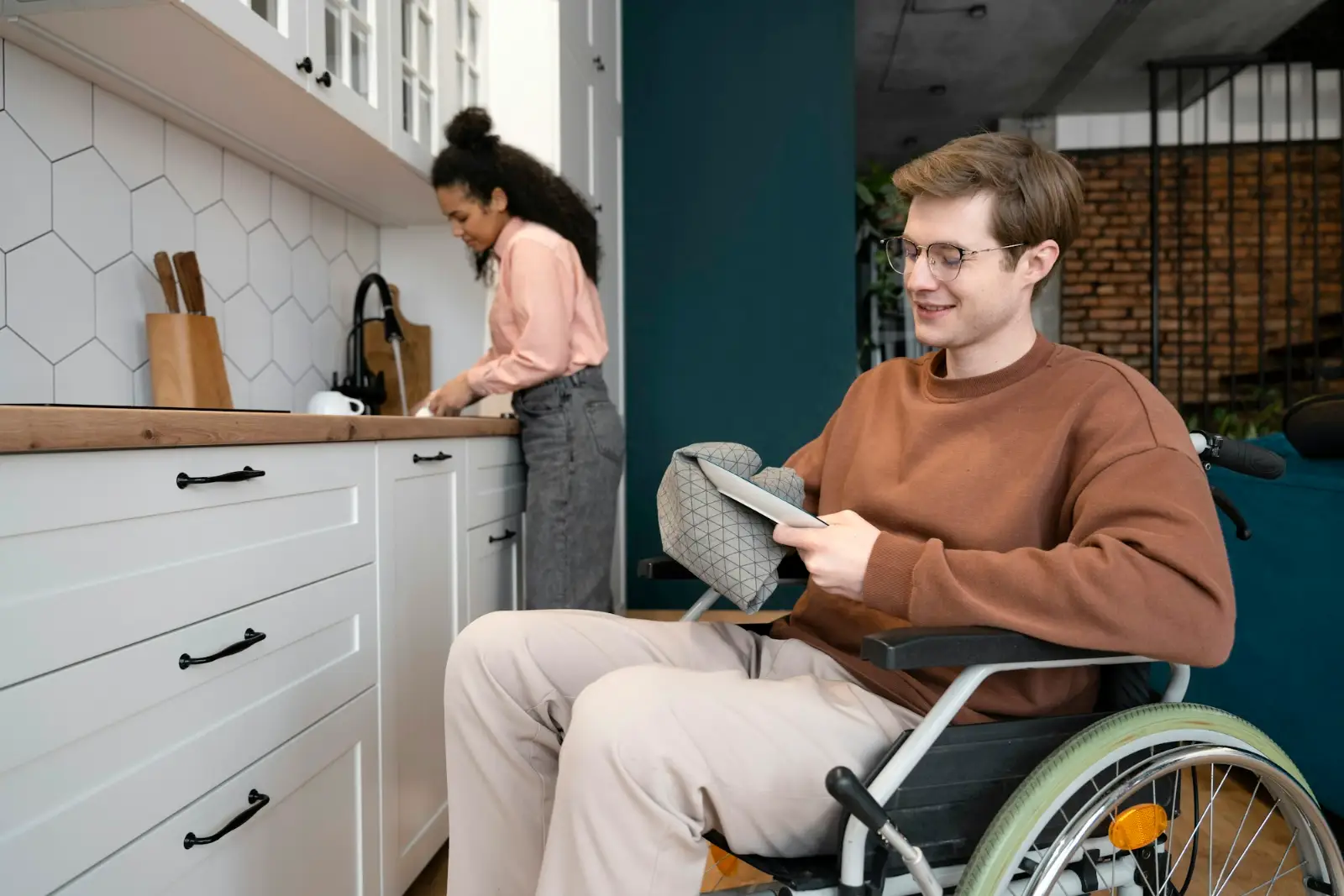
A kitchen can be made easier with small tools and smart storage before you think about rising countertops or a new layout.
This week
Quick wins
- Kettle tipper or a smaller kettle
- Perching stool to rest while preparing food
- Cart to move hot plates and drinks safely
- Easy-grip utensils and jar openers
- Move heavy items to waist-height cupboards
With planning
Bigger changes
- Lowered or height-adjustable countertops
- Side-opening oven at eye level
- Pull-down wall cupboards
- Space beneath the sink for a wheelchair
Bigger changes may need an occupational therapist assessment and may qualify for funding.
Common decisions
Who pays for this in the United States?
VA HISA can cover access to kitchen sinks and counters for veterans. Medicaid HCBS programs may cover home accessibility changes; otherwise it is usually self-pay.
Do I need a full kitchen adaptation?
Only if the layout stops you doing essential tasks safely. An occupational therapist can identify whether tools and equipment are enough first.
Guides
Related equipment
Tools
This page gives general information. For advice about your own situation, start with an occupational therapist, then your VA provider or state Medicaid agency.